
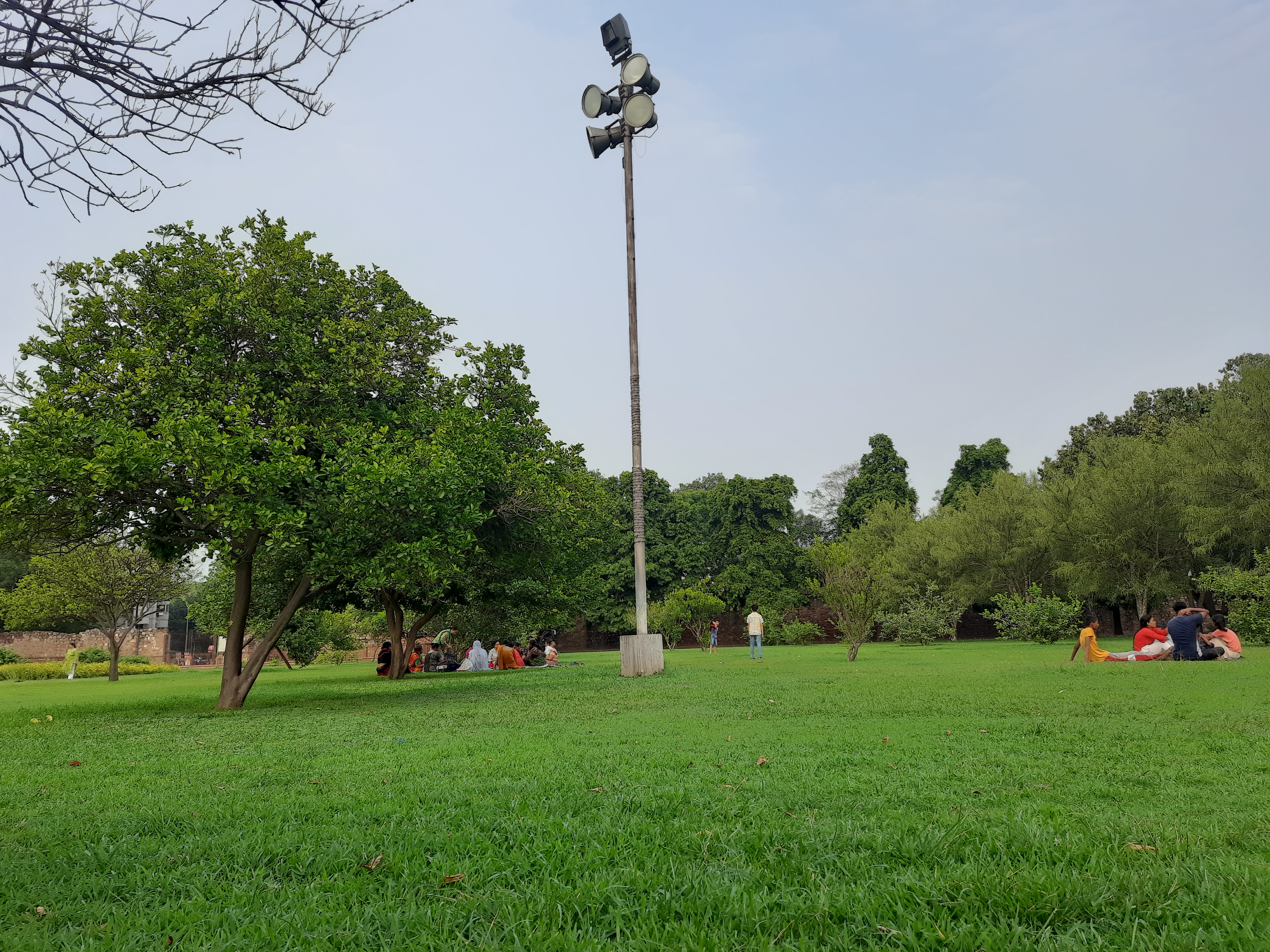
It is a well-documented global phenomenon that city planning – particularly in the Global South – favours the resource-rich sections of society and leaves substantial populations of the urban poor to fend for themselves (Roy, 2009; Watson, 2009). This fundamental political bias towards the politically powerful that has been institutionalised in the development process includes the inequitable distribution of critical public amenities like electricity, water supply and drainage (PUDR, 1996, p.6), but also extends to less tangible necessities, such as ecosystem services conferred by urban green infrastructure. Greenspaces have proven aesthetic, cultural, social and recreational benefits, intervene positively in the domains of climate regulation, water management, drainage, etc. as well as improve physical and mental health (see Urban Green Spaces and Human Health).
Environmental justice scholarship has been alert to the discriminatory apportioning of greenspaces in the city, and a multitude of studies has reliably demonstrated that neighbourhoods with high Socio-Economic Status (SES) are many times likelier to have access to high-quality and more bio-diverse urban greenspaces than neighbourhoods with a lower SES profile (Grove et al., 2006; Logan and Molotch, 2007; Kuras et al, 2020; Venter et al, 2020). However, such research has, by and large, assumed access to be synonymous with physical proximity and has tended to neglect the social and psychological facets of public use of urban green space.
Academic research in this field has usually conceptualised access as a quantifiable entity, measured through empirical parameters like the mean or median distance to an urban greenspace of specified size, the absolute area under green infrastructure, the number of parks within walking distance, open-source geographical data on recreational areas, land use analysis, etc. Public policy, similarly, equates access with nearness; for example, in the UK, the Accessible Natural Greenspace Standard advocates for people to live within 300 m of greenspace at least 2 hectares in size. While this is a productive line of enquiry (see Where Access is Defined), equating access simplistically with availability often does not paint a comprehensive picture of greenspace use. If proximity to publicly accessible urban greenery was the only criterion defining access, then it would follow that constructing such spaces near low-income neighbourhoods would ensure that the physiological, social, psychological and recreational benefits associated with public greenspace would naturally accrue to the urban poor through their increased use of the provisioned space. However, studies that examine the question of access qualitatively complicate such straightforward conclusions.
“First we shape the cities – then they shape us.”
– Jan Gehl, “Cities for People”
An insightful study conducted in Bristol, UK found that although inclusive urban planning practices had ensured that poorer residents lived closer to greenspaces, they were also the ones who reported “poorer perceived accessibility, poorer safety, and less frequent use” (Jones et al., 2009). Even more interestingly, those who lived in affluent neighbourhoods farther away from the green areas reported that they experienced “easy access” to greenspace. On the other hand, the lower-income neighbourhood residents were much likelier to state they found access “very difficult” or “fairly difficult” despite enjoying shorter distances to greenspace on an average. Another study that examined access to public greenspaces through a socio-economic lens found that despite neighbourhood parks being valued highly by low-income groups as a public good, parks proximate to neighbourhoods with low SES indicators were actually utilised less in American cities (Cohen et al., 2016).
Similarly, an evaluation of low-income, predominantly African-American neighbourhoods in the United States revealed that there did not appear to be a noteworthy connection between proximity to the closest park and number of park visits (Vaughan et al., 2018). Inadequate facilities, lack of maintenance, overcrowding, poor accessibility, and limited activities were cited as restrictions to park use in a study of a low-income neighbourhood in China (Dai C et al., 2023). Yet another study found that time constraints due to work timings influenced park use in poor communities in Australia (Austin et al., 2021). Further, operating hours and entry fee contributed to perceptions of accessibility in a Hong Kong-based study of greenspace usage (Wan & Shen, 2015). There is, therefore, many a slip between cup and lip, i.e. there are intervening considerations that prevent the direct translation of greenspace proximity to greenspace use.
…unequal biodiversity distribution is “not simply an ecological problem to solve, but rather an ecological manifestation of social inequality…”
– Urban socioeconomic inequality and biodiversity often converge, but not always: A global meta-analysis
(Kuras et al., 2020)
It is also worth mentioning that socio-economic factors mediate the range of ecosystem services sought by a community. For example, urban gardens can be distributed in a fair and balanced manner, with similar structures and accessibility for different groups of people. However, the benefits obtained from these gardens may vary based on whether individuals primarily seek provisional benefits, such as food, or cultural benefits, such as a sense of place (Doshi et al., 2018). While increased woody tree cover was desired by well-guarded, affluent neighbourhoods for climate regulation, air purification, noise reduction, recreation, and aesthetics, similar kinds of vegetation evoked fear and stress in low-income, high-crime neighbourhoods due to the possibility of the dense vegetation being used as a hiding place for criminals while constraining the vision of potential victims (Reis et al., 2012). Thus, many other factors apart from proximity affect actual instances of greenspace visitation by different socio-economic groups.
Since unequal biodiversity distribution is “not simply an ecological problem to solve, but rather an ecological manifestation of social inequality” (Kuras et al., 2020), urban greenspace – which is in high demand in the densely populated cityscape – becomes a site for political contestation between social groups, which is only “partly regulated through urban planning” (Ernstson, 2013). Political struggle often manifests in less explicit ways than regimented planning processes – for example, in unsaid expectations of social behaviour, and in the ensuing disproportionate state reaction when these expectations are belied. A particularly telling incident occurred in Delhi in 1995 that dramatically rendered visible the social tensions around the use of public greenspace, resulting in the tragic death of 5 slum dwellers.

According to a 1996 report by the People’s Union for Democratic Rights (PUDR), a Delhi-based civil rights organisation, the site of the incident was a park dividing Ashok Vihar (high SES) and Shaheed Sukhdev Nagar (hereafter SS Nagar; very low SES). Due to extremely inadequate sanitation facilities for the slums, the residents would often use the park for defecation. After court intervention stopped this, the park was still used as an entry point to the ration shop, schools and hospital, all of which were located in Ashok Vihar. Even this was resented by the wealthy residents of the latter colony. Matters came to a head when an 18-year-old newly-arrived migrant worker was caught defecating in the park. The residents handed him over to the police, who tortured and beat him to death. During the protests that subsequently broke out in SS Nagar, 4 more people lost their lives in police firing.
The police explained the deaths away as an “inevitable” blow-up as a result of the clash between the haves and the have-nots. No one was punished for the custodial murder or the indiscriminate firing that followed. At stake here for the Ashok Vihar residents was a park; for the people of SS Nagar, it was basic living space (PUDR, 1996, p.9). The environmental goods that truly mattered to the urban poor in this situation were shelter, water and sanitation; what mattered to the wealthy Ashok Vihar residents was “their sense of gracious urban living, a place of trees and grass devoted to leisure and recreation”. (Baviskar, 2006)
For now, governmental planning policy continues to be wilfully blind to any complex formulation of access to greenspace. For example, park design guidelines released by the Delhi Urban Art Commission (DUAC) in 2020 suggest that the increased funding needed for the upkeep of parks could be sourced through a mechanism by which adjacent properties are able to support the operation of the park (DUAC, 2020, p.67) – an instruction that effectively takes low-income neighbourhoods who cannot make such contributions out of any decision-making regarding the maintenance of their local parks, if proximate in the first place. Inclusive urban planning of greenspaces that takes into account the ecosystem service preferences of local stakeholders irrespective of their SES can make a difference in the liveability of cities, but first, more qualitative studies of access need to be undertaken to grasp the factors that constrain the urban poor’s use of greenspace in the Indian context.
References
- Austin G, Duncan MJ & Bell T. (2021). Codesigning Parks for Increasing Park Visits and Physical Activity in a Low-Socioeconomic Community: The Active By Community Design Experience. Health Promotion Practice, 22(3), 338-348. https://pubmed.ncbi.nlm.nih.gov/32088991/
- Baviskar, A. (2006). Cultural Politics of Environment and Development: The Indian Experience. Review of Development and Change, 11(1), 1–14. https://journals.sagepub.com/doi/abs/10.1177/0972266120060101
- Cohen DA, Han B, Nagel CJ, Harnik P, McKenzie TL & Evenson KR. (2016). The first national study of neighborhood parks: implications for physical activity. American Journal of Preventive Medicine. 51(4):419–26. https://doi.org/10.1016/j.amepre.2016.03.021
- Dai, C.; Maruthaveeran, S.; Shahidan, M.F.; Chu, Y. (2023). Usage of and Barriers to Green Spaces in Disadvantaged Neighborhoods: A Case Study in Shi Jiazhuang, Hebei Province, China. Forests, 14, 435. https://doi.org/10.3390/f14020435
- Delhi Urban Art Commission. (2020). Park Design Guidelines: Delhi. https://duac.org.in/Upload/City%20Level%20Studies/Landscape%20studies/653973045142163.pdf
- Doshi, Marit & Mitchell, Matthew & Shanahan, Danielle & Wilson, Kerrie & Ives, Christopher & Lovelock, Catherine & Rhodes, Jonathan. (2018). The role of socio-economic factors in planning and managing urban ecosystem services. Ecosystem Services, 31, 102-110. https://www.sciencedirect.com/science/article/abs/pii/S2212041616302480?via%3Dihub
- Ernstson, Henrik. (2013). The social production of ecosystem services: A framework for studying environmental justice and ecological complexity in urbanized landscapes. Landscape and Urban Planning, 109(1), 7-17. https://doi.org/10.1016/j.landurbplan.2012.10.005
- Evan R. Kuras, Paige S. Warren, John Aloysius Zinda, Myla F.J. Aronson, Sarel Cilliers, Mark A. Goddard, Charles H. Nilon & Richelle Winkler. (2020). Urban socioeconomic inequality and biodiversity often converge, but not always: A global meta-analysis. Landscape and Urban Planning, 198. https://doi.org/10.1016/j.landurbplan.2020.103799
- Gehl, Jan. (2010). Cities for People. Island Press.
- Gonji, Ajay Immanuel. (2020, July 17). Where access is denied. https://atomic-temporary-98152196.wpcomstaging.com/2020/07/17/where-access-is-denied/
- J. M. Grove, A. R. Troy, J. P. M. O’Neil-Dunne, W. R. Burch Jr., M. L. Cadenasso & S. T. A. Pickett. (2006). Characterization of Households and its Implications for the Vegetation of Urban Ecosystems. Ecosystems, 9, 578–597. https://doi.org/10.1007/s10021-006-0116-z
- Jones A, Hillsdon M & Coombes E. (2009). Greenspace access, use, and physical activity: understanding the effects of area deprivation. Prev Med, 49(6), 500-5. https://www.ncbi.nlm.nih.gov/pmc/articles/PMC3748371/
- Kumar, Vipin & Chauhan, Sonali. (2019, September 30). Urban Green Spaces and Human Health. https://atomic-temporary-98152196.wpcomstaging.com/2019/09/30/urban-green-spaces-and-human-health/
- M. Ferguson, H.E. Roberts, R.R.C. McEachan, & M. Dallimer. (2018) Contrasting distributions of urban green infrastructure across social and ethno-racial groups. Landscape and Urban Planning, 175, 136-148. https://doi.org/10.1016/j.landurbplan.2018.03.020
- Logan, J. R., & Molotch, H. (2007). Urban fortunes: The political economy of place, with a new preface (2nd ed.). Univ of California Press.
- People’s Union for Democratic Rights. (1996). A Tale of Two Cities: Custodial Death and Police Firing in Ashok Vihar. https://pudr.org/sites/default/files/2019-02/1996%20A%20tale%20of%20two%20cities-CD-ASHOK%20VIHAR.pdf
- Reis, Elivânia & López-Iborra, Germán & Pinheiro & Renato. (2012). Changes in bird species richness through different levels of urbanization: Implications for biodiversity conservation and garden design in Central Brazil. Landscape and Urban Planning, 107, 31–42. https://www.sciencedirect.com/science/article/abs/pii/S0169204612001338?via%3Dihub
- Roy, A. (2009). Why India Cannot Plan Its Cities: Informality, Insurgence and the Idiom of Urbanization. Planning Theory, 8(1), 76–87. https://doi.org/10.1177/1473095208099299
- Vaughan CA, Colabianchi N, Hunter GP, Beckman R & Dubowitz T. (2018). Park Use in Low-Income Urban Neighborhoods: Who Uses the Parks and Why? J Urban Health, 95(2), 222-231. https://link.springer.com/article/10.1007/s11524-017-0221-7
- Watson, Vanessa. (2009). The planned city sweeps the poor away…’: Urban Planning and 21st Century Urbanisation. Progress in Planning, 72(3), 151-193. https://doi.org/10.1016/j.progress.2009.06.002
- Zander S. Venter, Charlie M. Shackleton, Francini Van Staden, Odirilwe Selomane, & Vanessa A. Masterson. (2020). Green Apartheid: Urban green infrastructure remains unequally distributed across income and race geographies in South Africa. Landscape and Urban Planning, 203. https://doi.org/10.1016/j.landurbplan.2020.103889
Featured Image Credit: Swathi Gangadharan