

Welcome To
Centre for Urban Ecology and Sustainability
Our Mission
The Centre for Urban Ecology and Sustainability (CUES) aims to address urban ecological issues with a view to offering solutions, and develop a skilled cohort of professionals who actively engage in, and find solutions for urban ecological challenges. The Centre serves as a focal point where researchers, government & non-governmental, citizens and private agencies converge and participate in the planning, implementation, and evaluation of sustainable environmental projects in cities. CUES collaborates actively with other schools and centres in AUD like the School of Human Ecology, School of Development Studies (SDS), School of Design (SDS), Centre for Community Knowledge (CCK) on areas of common interests. The Centre envisages to build linkages with teaching and research programmes within the University to provide students with hands-on learning, field practicum and engaged scholarship opportunities. The Centre hosts interactions and dialogues between Universities and other organizations in the city across thematics in urban sustainability.


News in Your Inbox
Subscribe to our website to receive updates from our Centre.
Our Blogs
-

Urban Green Spaces and Human Health
Vipin Kumar and Sonali Chauhan There is an increasing demand for residential and commercial spaces , as infrastructure is often preferred over natural spaces in the city. The industrial model of development through which we create our cities results in a double kill – i) decline in natural green spaces (which are pollution controlling agents…
-

Learning to Live in Cities: Challenges of Urban Green Spaces
Sonali Chauhan My work as a researcher in the field of ecology doesn’t always mean spending several hours in forested areas but it also means spending long hours in front of a computer doing regular administrative work. While I enjoy being in the field collecting data and working on plants, I am not particularly enthusiastic…
-

Island City
Shiwani Standing in the shade of a tree on a hot summer day is often relaxing and refreshing. One would appreciate this all the more had they experienced the sweltering heat of Delhi’s summer. Being one of the most densely populated cities on the planet, the temperatures in the core areas of the city are…
-

Wetland Restoration through a Cultural approach
Vijaylakshmi Suman Ecological restoration can be understood as an ensemble of practices from the natural sciences, the social sciences, politics, and technology. The objective of this article is not to overload readers with jargon from ecological restoration, instead, to generate a discussion that focuses on the concept of wetland restoration as a cultural phenomenon. Despite…
-

Dhanauri: A Bird Habitat Amidst Human Habitation
Himanshu Choudhery The Dhanauri wetland is a small but important wetland located in Greater Noida, Gautam Buddha Nagar district, Uttar Pradesh, close to the Okhla bird sanctuary and Surajpur wetland. The wetland is surrounded by several villages, namely, Dhanauri, Amipur Bangar, Thasrana, Gadana and Bhatta. The wetland, which is mostly composed of marshes, is a…
-

It takes Two to Tango
Kartik Chugh For thousands of years, humans and other animal species have accompanied each other with a strong bond. Human-animal relationship has been prevalent in the course of human history and is rooted in our co-evolution. The companion species which were not part of the same ecological niche became a part of an evolutionary process…
-
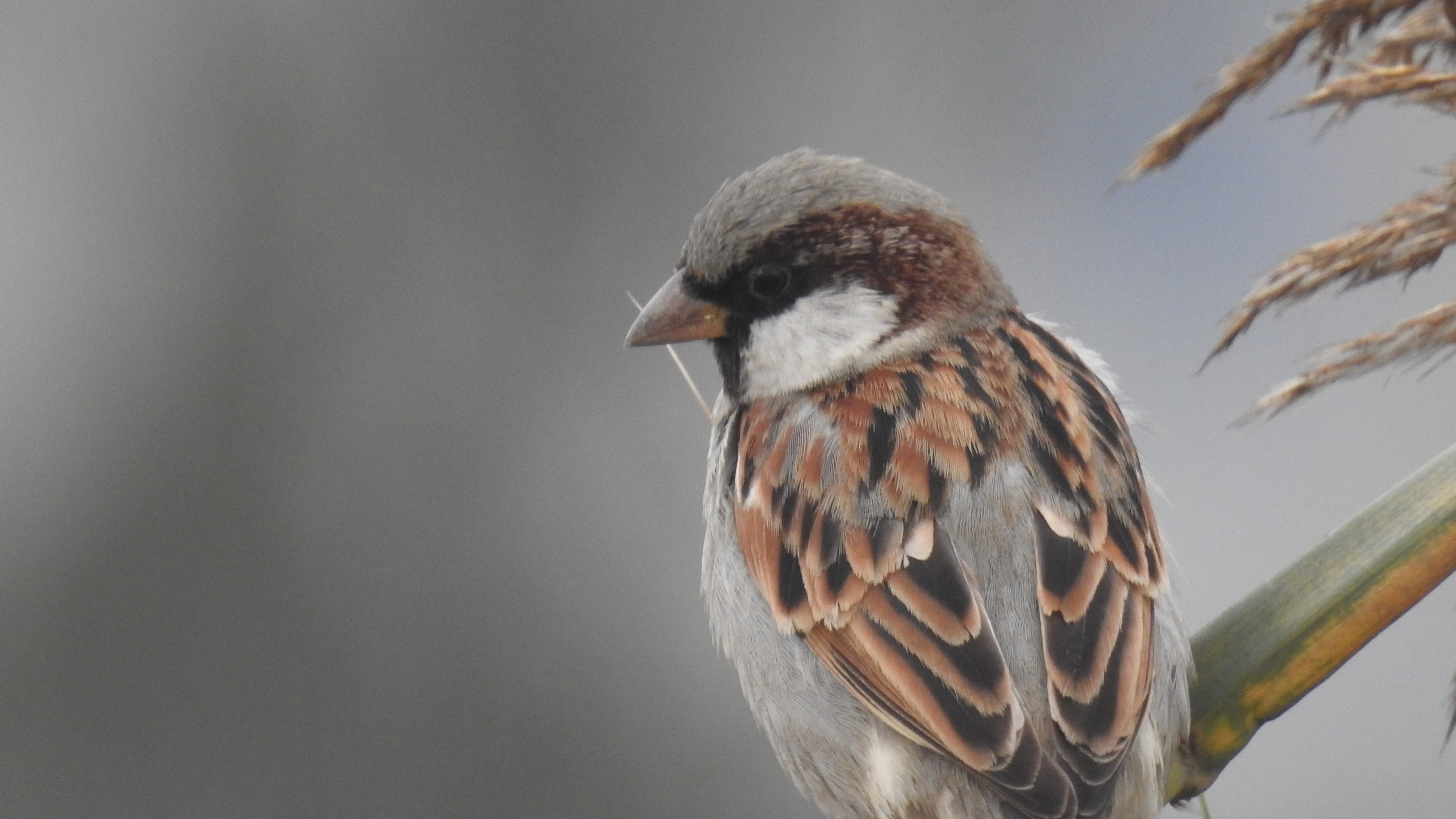
A Bird in Hand Worth Protecting
Himanshu Choudhery With an escalating human population, due to high rates of migration from rural to urban areas, cities around the world are becoming very populated and polluted. This influx of people in urban areas has led to an overall reduction in green cover as natural spaces are converted into residential areas to accommodate the…
-

Gust of Dust
Shiwani The Indo-Gangetic Plains stretching from north India all the way to the east have been witnessing very poor air-quality during the pre-monsoon season (March to May) for the past few years. Delhi, due to its geographical location, is placed in the middle of the dust-laden Westerly winds originating from the Arabian Peninsula or the…
-

Grasslands in a Changing World
Shashank Bhardwaj “Each grass- covered hillside is an open book for those who care to read. Upon its pages are written the condition of the present, the events of the past, and a forecast of those of the future”. John E. Weaver (1954) Grasses and grasslands have been an integral part of human civilization and…
-

Human-generated Food and Urban Wildlife
Ajay Immanuel Gonji In an earlier blog post that I had written, I talked about how urban wildlife depends on a unique combination of naturally occurring and human-generated food. In most cities of the globe, it is not uncommon to witness birds and mammals benefitting from anthropogenic food resources. This food may be derived either…
CUES Restoration Project Site: Dheerpur Wetland, Delhi


Description:
Restoration of Dheerpur Wetlands: A collaboration of CUES, AUD & DDA
The marshes and wetlands of the Yamuna region once extended from Azadpur to the present-day banks of the river. This region has been heavily drained and undergone an extensive land-use change during the last fifty years. Remnants of once widespread historical marshes can now only be seen near Jahangirpuri, Dheerpur and Burari. Since wetlands are increasingly appreciated globally and nationally for their socio-ecological functions and provisions, the Delhi Pollution Control Committee (DPCC) decided to restore the wetlands of Dheerpur.
Fragments of these wetlands have been filled up, dyked, dried and carved out for seasonal agriculture. Hence, it may not be sufficient to only stop their further degradation of wetlands of Dheerpur but would also be necessary to restore them for posterity. With this view, the Delhi Development Authority (DDA) has entered into a Management Agreement with Ambedkar University Delhi (AUD), in which the land ownership remains with DDA, and AUD would restore the wetlands. DDA would assist in civil work, funding research and restoration work, whereas AUD is entrusted with providing technical guidance for restoration and maintenance of the wetlands.
The Management Agreement for Dheerpur Wetland Project between AUD and DDA was signed on 17 February 2015. Following which the project was formally inaugurated on 19th June 2015.
Click here to read more on the Dheerpur Wetland Restoration
Location:
Dheerpur Wetland Project Site, Gandhi Vihar, Gopalpur Village,
Delhi 110009
Visiting hours:
10am – 5pm
Project Initiated:
Delhi, June 2015


